

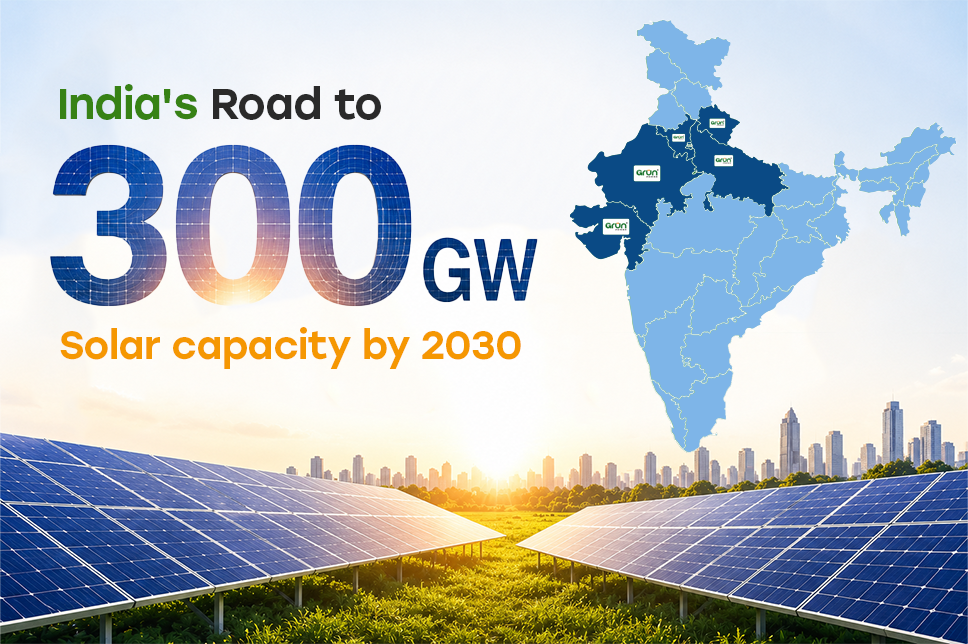
India's Road to 300 GW Solar Capacity by 2030
India is rapidly transforming its energy scene with an ambitious idea, to reach 300 GW of solar capacity by 2030. As one of the fastest-growing green power markets globally, the country is pouring real effort into solar infrastructure, supportive government guidelines, and new technologies to lessen reliance on fossil fuels. In other words it’s moving pretty quickly, even if you look at it day by day.
This transition is not only helping India meet its climate commitments, but also it is opening fresh possibilities for homeowners, businesses, industries, and investors, in a sort of overlapping way. India’s leading solar company plays a big role in speeding up this change by offering smart, efficient, and dependable solar solutions, across the entire country.
India's Solar Energy Growth: A New Era of Clean Power
India has seen, a pretty remarkable progress in solar energy over the past decade. from big solar parks to residential rooftop installs, solar power is now one of the country’s most preferred renewable sources, honestly. It’s like everywhere you turn there is some new unit, and people keep leaning more on it.
The Government of India has introduced several initiatives, including the National Solar Mission, PM Surya Ghar Muft Bijli Yojana, solar parks, net metering and some financial incentives too, to push for broad solar adoption. In practice these steps are gradually increasing the renewable energy share while also making solar systems more affordable for consumers, which feels kind of practical, not just theoretical.
With a goal of 300 GW of installed solar capacity by 2030, India is making a big move toward better energy security and cutting carbon emissions, step by step… honestly it feels like a serious stride..
Why 300 GW Solar Capacity Matters
Hitting this milestone is more than simply upping electricity generation , it kind of shows India’s commitment to constructing something cleaner, greener, and more sustainable overall. In other words, it’s like a practical promise, not just a number on paper.
Energy Security
India still imports a pretty big share of its conventional fuel needs. So, when it keeps expanding solar capacity , it can lower reliance on imported fossil fuels, and also bolster national energy security, by using locally generated renewable power. In other words it’s a more self-reliant energy route, even if everything isn’t perfect right away.
Lower Carbon Emissions
Solar energy can make electricity without making harmful greenhouse gases, and you kinda know it. When India ups its solar adoption it will meaningfully cut down on the country’s carbon footprint, and also help the bigger global climate efforts, in a steady way.
Economic Growth
In the renewable energy sector, companies are creating thousands of jobs in manufacturing, engineering, project management, installation and maintenance, you know. The rise of solar power is also drawing in domestic as well as international investments, which is pretty crucial.
Affordable Electricity
As solar tech becomes sort of more efficient and cheaper , people in general can notice lower electricity costs. Home, business, and factories can produce their own power too, which helps cut down on energy spending for the long run.
Key Drivers Behind India's Solar Expansion
Several factors are contributing to India’s ambitious solar journey.
Government Policies and Incentives
The government still keeps rolling out policies that kinda push solar investments forward, by using subsidies, tax advantages, net metering, plus easier approval routes. All of that makes solar power feel more financially workable for both homes and enterprises.
Technological Advancements
Modern solar panels, smart inverters, battery storage systems and digital monitoring solutions have improved a lot the overall efficiency and stability of solar installations, kind of. With these updates, people can squeeze more energy out, and also tune system performance better. It’s like everything works in concert, smoother, and less headaches overall.
Growing Corporate Adoption
Across different business areas, companies are sort of adopting solar energy to cut down on ongoing expenses , and also to reach sustainability objectives. A lot of manufacturing sites, schools or universities , hospitals, storage facilities, plus office and shopping premises are now spending on rooftop solar and even ground-mounted installations.
Rising Environmental Awareness
Consumers are getting more aware about environmental responsibility , like, less pollution and more caring for the land long term. That move into clean energy sort of shows a stronger determination to cut down emissions and help keep natural resources safe for upcoming generations.
The Role of India's Leading Solar Company in Achieving the Vision
Reaching 300 GW isn’t possible without experienced solar solution providers. India’s leading solar company truly helps a lot by delivering end-to-end solar services that cater to different energy needs. For residential customers, commercial ones, and even industrial partners, they manage to cover the full range of requirements in a pretty seamless way.
From energy evaluation and system planning, to installing, commissioning, and then maintenance, proper solar firms make sure that every project, hits the best level of efficiency and steady long-term results. They look at it all end to end, not just one part.
Their expertise includes:
- Residential rooftop solar systems, sort of a everyday kind of thing
- Commercial and industrial solar installations , also for factories and bigger buildings
- Solar EPC solutions, build–own–operate vibes but tailored
- Solar project consultation, quick guidance and then next steps
- Operation and maintenance services, ongoing care and monitoring
- Government subsidy and compliance assistance, paperwork help with the rules.
By offering tailored solutions and top quality installations, India’s leading solar company helps customers shift toward renewable energy , with confidence and long term savings.
Challenges on the Road to 300 GW
While India’s progress is impressive, several challenges still need attention.
- Land acquisition for utility scale solar project(s)
- Grid modernization, energy storage integration and that whole synchronization thing
- Faster development of transmission infrastructure , because timelines matter
- Expansion of a skilled workforce , with some additional training
- Continued policy support , plus ongoing investment from funders and stakeholders
Tackling these challenges with innovation, teaming up, and strategic planning , is going to be crucial in order to reach the national solar goal.
A Bright Future Powered by Solar
India’s renewable energy journey is kind of building a cleaner, sturdier, and more self-reliant energy nation. The aim to reach 300 GW of solar capacity by 2030 it shows the country’s dedication to sustainability, economic growth, and also environmental safeguarding.
As technology keeps moving forward and solar adoption keeps accelerating, people and companies have a pretty solid chance to join this green revolution, like for real. Working with India’s leading solar company means you can get top-tier solar solutions, real expert guidance ,and dependable support during the whole shift.
India’s ride toward 300 GW of solar capacity is really starting to set the tone for clean energy and long term sustainable development. With government initiatives that keep showing up, plus growing public awareness and fast technological innovation, solar power is slowly becoming sort of the base layer for the nation’s energy future.
Picking India’s leading solar company lets homeowners, firms, and industries lean into renewable energy with confidence, while also helping a bit toward a cleaner tomorrow. With us, we can run India’s sustainable future one single solar install at a time, step by step and kind of in sync.
As the country moves a bit closer to its 2030 vision, investing in solar energy is no longer only an environmental responsibility— it’s also a smart business call that brings long-term economic returns and operational advantages. When people , companies and other groups adopt fresh solar approaches right now, they can help steer India’s cleaner energy future in a direct way while also building durable value that lasts for generations ahead.